
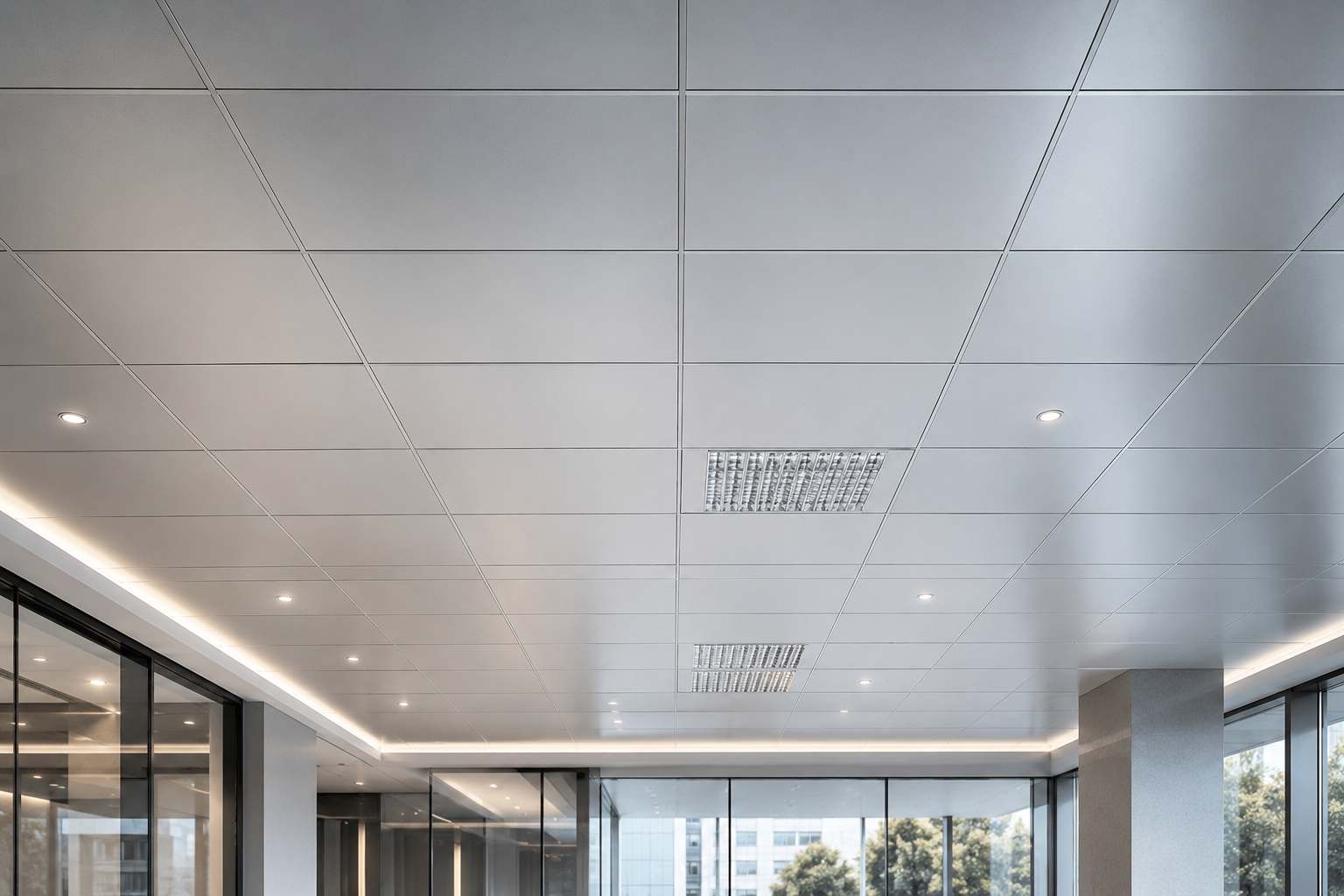
What Is Aluminium Gypsum?
"Aluminium gypsum" typically refers to one of two things:
1. Gypsum boards with an aluminium foil backing – standard gypsum plasterboards with a thin layer of aluminium foil on the back that acts as a vapour barrier, providing heat reflectance and moisture protection.
2. Gypsum boards used with aluminium framing systems – gypsum boards installed on aluminium or metal frames instead of traditional wooden or steel frames, creating a lighter, more durable ceiling or partition system.
Why Clients Are Choosing Aluminium Gypsum Over Traditional Gyproc
Superior Moisture Resistance
Traditional gypsum boards are vulnerable to moisture – they can sag, delaminate, or promote mould growth when wet. Aluminium is inherently moisture-resistant. It will not rot, swell, or support microbial growth. This makes aluminium-based systems ideal for kitchens, bathrooms, coastal regions like Mombasa, and commercial spaces prone to moisture exposure.
Longer Lifespan
Aluminium ceiling systems often exceed 30 years of service life. Traditional gypsum panels typically offer 10 to 20 years before requiring repair or replacement. The client benefit is simple: a longer-lasting investment that saves money on repairs over time.
Lightweight and Easy to Install
Aluminium is significantly lighter than steel framing – 2700 kg/m³ compared to 8050 kg/m³. This means faster installation, lower transport costs, and reduced labour costs.
Modern Aesthetic and Design Flexibility
Aluminium ceiling panels provide a sleek, modern appearance with reflective surfaces that enhance lighting. They offer perforated patterns for acoustics, factory-applied finishes, integration with LED lighting, and concealed suspension systems for a seamless look.
Better Acoustic Performance
Perforated aluminium panels can achieve Noise Reduction Coefficient values of 0.7 to 0.9, reducing ambient sound levels by up to 35 decibels in offices or hospitals.
Fire Resistance
Aluminium is non-combustible with a high melting point. While gypsum boards also offer fire resistance, once the core dehydrates under extreme heat, performance diminishes.
Sustainability
Architectural aluminium products commonly contain 30 to 60 percent recycled content, with near 100 percent recyclability at end of life.
The Health Question: Should You Be Concerned About Aluminium Exposure?
This is the question many clients ask. Let's look at what the research actually says.
What Research Shows About Aluminium and Brain Health
Multiple scientific studies have investigated the link between aluminium exposure and neurological conditions:
- A 2024 study confirmed that rats exposed to aluminium exhibited significant learning and memory impairments, accompanied by hippocampal neuron damage. The research found that aluminium exposure damages mitochondrial function and synaptic plasticity – core mechanisms also implicated in Alzheimer's disease.
- Another 2024 study on mice found that aluminium nanoparticles impaired memory and increased inflammatory markers (IL-1β and IBA-1) in the hippocampus – a brain region critical for memory formation.
- A 2022 review highlighted that aluminium exposure triggers oxidative stress, neuroinflammation, amyloid-beta deposition, and neurofibrillary tangle formation – all hallmarks of Alzheimer's disease pathology.
- A 2025 study on occupational aluminium exposure found significant caudate nucleus atrophy in aluminium-exposed workers, with atrophy strongly associated with cognitive decline, particularly in memory and processing speed.
- A 2024 systematic review concluded that long-term aluminium exposure appears to increase dementia risk. Research has also shown that aluminium can cross the blood-brain barrier, accumulate in neural tissues, and induce neurotoxic effects.
But Here's the Important Context
The research primarily focuses on occupational exposure – workers in aluminium smelters, mining, and related industries who face significantly higher exposure levels than the general public.
For context, aluminium is everywhere. It is the most abundant metal in the earth's crust. We are exposed to it through food, water, air, cookware, cosmetics, and even vaccines. A healthy individual normally carries 30-50 mg of aluminium in their body, and our kidneys efficiently remove it through urine.
What About Aluminium Gypsum Boards Specifically?
The aluminium in gypsum boards is not the same as occupational exposure. The aluminium is either a thin foil backing or part of the framing system – it is encapsulated within the building structure, not floating in the air as dust or nanoparticles that you breathe in.
The main health risk with gypsum boards – whether aluminium-backed or traditional – is dust during installation. Cutting, sanding, or handling gypsum boards generates dust that can irritate the respiratory system, skin, and eyes. Workers in gypsum-related industries have reported mild to moderate neurological complaints including finger dysfunction, joint pain, and muscular numbness.
However, once installed, gypsum boards are considered safe. According to Gyproc safety data sheets, gypsum board **contains no hazardous chemicals** and is not classified as hazardous.
The Bottom Line on Health
The scientific evidence linking aluminium exposure to Alzheimer's and memory loss is real and concerning – for people with high, chronic occupational exposure. For the average homeowner or office worker, the aluminium in a gypsum ceiling system is not a significant exposure route.
Alzheimer's Research UK, a leading dementia research charity, states: “Currently, no research proves that day-to-day exposure to environmental metals causes Alzheimer's.”
The Verdict
Aluminium gypsum systems offer clear advantages in moisture resistance, lifespan, aesthetics, and acoustic performance. The higher initial investment is often offset by lower maintenance costs and longer service life.
Traditional Gyproc gypsum boards remain a solid, cost-effective choice for projects with tighter budgets or where moisture isn't a major concern.
Both materials are safe for use once installed. The main health consideration – dust during installation – applies to both and is easily managed with proper protective equipment.
Need Help Choosing?
At Nestora Interiors and Construction, we have helped countless clients across Nairobi, Mombasa, Kisumu, Eldoret, Nakuru, Kiambu, and Machakos make the right material choices for their projects.
Whether you are considering aluminium gypsum systems, traditional gypsum boards, or any other finishing material, our team of experts can guide you through the decision-making process.
Contact us today for a free consultation and quote.
📱 WhatsApp: +254 705 721 612
📞 Call: +254 705 721 612
📍 Visit: nestorainteriors.com
Frequently Asked Questions
Is aluminium gypsum more expensive than traditional gypsum?
Yes, aluminium-based systems typically have a higher initial cost. However, the longer lifespan and lower maintenance requirements often make them more cost-effective in the long run.
Can aluminium gypsum be used in coastal areas like Mombasa?
Absolutely. Aluminium's resistance to salt-laden air and moisture makes it an excellent choice for coastal regions.
Does aluminium gypsum cause Alzheimer's?
There is no evidence that aluminium gypsum ceiling systems cause Alzheimer's. The research linking aluminium to Alzheimer's focuses on high, chronic occupational exposure – not encapsulated building materials. Reputable products are certified safe for indoor use.
Is aluminium gypsum safe for homes with children?
Yes, once installed, both aluminium gypsum and traditional gypsum boards are safe. The only risk is during installation from dust, which is why professional installation with proper safety equipment is recommended.
How long does aluminium gypsum last?
Aluminium ceiling systems are commonly rated for 25 years or more of service life under normal conditions.
Can I paint aluminium gypsum ceilings?
Yes, although many come with factory-applied finishes that do not require additional painting.
Is aluminium gypsum worth the extra cost?
For many clients, yes. The combination of moisture resistance, longevity, modern aesthetics, and low maintenance makes it a worthwhile investment.
Need help with your ceiling or finishing project? Nestora Interiors and Construction is here to help. Contact us today for a free consultation.
Leave a Comment
Comments are currently closed. For inquiries, please contact us.